One Penny a Gallon: The 1916 Fuel Scam That Fooled America
The Story
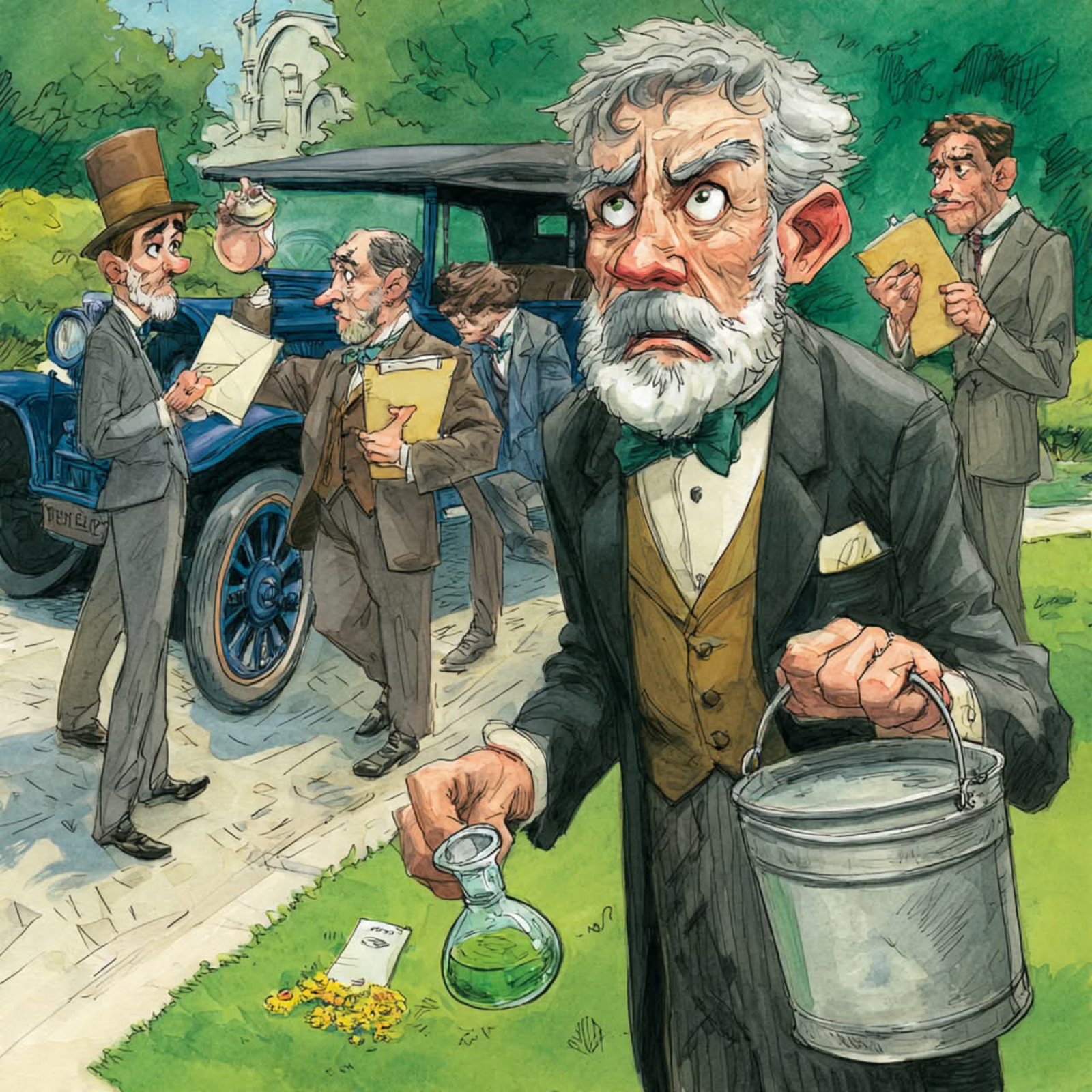
In April 1916, 70-year-old Louis Enricht stood on a Long Island lawn with a tin pail, a vial of emerald liquid, and a claim: he could turn garden-hose water into motor fuel for one penny a gallon.
Reporters watched him pour water, add a few green drops, and drive a car for 30 minutes at 30 mph. The scent of bitter almonds filled the air. The wires lit up. And Henry Ford, desperate to break the “Standard Oil octopus,” sent $10,000 and a brand-new Model T.
In this episode we break down the mechanics of the scam: acetone, acetylene, and the chemistry that looked like alchemy but destroyed engines from the inside. We follow Enricht’s playbook: paranoia, sealed envelopes, German spies, and a million-dollar offer from Hudson Maxim that he never intended to deliver.
It’s a story about chemistry, charisma, and how even the greatest innovator can be blinded by a dream that looks exactly like the one he’s chasing.
Chapters:
00:00 The Farmingdale Demonstration
04:10 Henry Ford’s $10,000 Check
08:22 The Chemistry Behind the “Miracle”
12:05 Maxim, Spies, and the Sealed Envelope
16:40 Sing and the Last Con
#HenryFord #LouisEnricht #WaterFuel #ScamHistory #1916 #AmericanHistory #Innovation
Lewis and Rick stood on his meticulously manicured lawn in Farmingdale, Long Island, holding a simple tin pail and a small translucent vial of emerald green liquid. It was April 16th, 1916, and the world was starving for fuel. The Great War had turned the Atlantic into a graveyard and sent the price of gasoline climbing toward 30 cents a gallon. a fortune for the average worker. But in Richt, a 70 -year -old with a silver beard and the steady gaze of a prophet claimed he had solved the crisis of the century.
He looked at the circle of skeptical reporters and offered a challenge that seemed like pure alchemy. He told them he could turn a bucket of common garden hose water into high -test motor fuel for just one penny a gallon. To prove it, he gestured toward a small non -descript car parked nearby. He had the reporters stick their fingers into the tank to verify it was bone dry. Then he took the pail, filled it with water from his own tap, and invited the newsman to taste it. It was, they confirmed, nothing but lukewarm Long Island water.
Enric then uncorked his vial and let a few drops of the green fluid fall into the bucket. The water didn't change color, but a sharp, sweet scent of bitter almonds suddenly filled the spring air. He poured the mixture into the car's tank, stepped into the driver's seat, and turned the crank. The engine didn't just cough, it roared. For thirty minutes, Enric drove the astonished reporters through the streets of Farmingdale at speeds hitting thirty miles per hour. When they returned, The news wires lit up with a story that would reach the desk of the most powerful industrialist in the world, Henry Ford.
For Ford, this wasn't just a business opportunity. It was a crusade he had spent years dreaming of a way to free the American driver from the standard oil octopus. And here was a man promising to do it with a bucket and a garden hose. But Henry Ford was about to learn that in the world of high stakes invention, The most dangerous thing you can have is a solution that fits your ideology too perfectly. This is the story of how one of history's greatest innovators was outmaneuvered by a master of the long con.
The news of the Farmingdale demonstration hit the front page of the New York Times the next morning and the ripples moved fast. In Detroit, Henry Ford read the reports with a mixture of excitement and vindication. Ford was a man of intense, often contradictory passions. He was the titan of mass production. Yet he harbored a deep, rustic nostalgia and a profound distrust of the Eastern banking establishment and the oil monopolies. He had already experimented with ethanol and was convinced that the future of power lay in something other than petroleum.
If Lewis and Richt truly had a chemical additive that could bridged the gap between water and combustion. It was the final piece of the puzzle. Within days, Ford's personal representative arrived in Farmingdale to scout the situation. They found Enric in his workshop surrounded by beakers and a lingering scent of that almond -like chemical. The inventor was cagey, but charismatic. He didn't want to talk about the how, only the result. He played the role of the humble, elderly genius being hounded by the oil interests.
It was a persona designed specifically to appeal to Ford's own prejudices. By late April, the correspondence between the two men became official. Ford sent a letter to Enric, expressing his profound interest and inviting a more formal collaboration. He didn't just send words. Though he sent a brand new 1916 Ford Model T, a gift to the man he believed might be the savior of the American motorist. Enric accepted the car with a humble nod and promptly used it for his next round of demonstrations, ensuring that everyone knew the great Henry Ford was already in his corner.
The mechanics of the scam were as brilliant as they were simple. relying on a fundamental misunderstanding of chemistry that was common at the time. To the average person in 1916, an internal combustion engine was still a bit of a mechanical mystery. A box that took liquid and turned it into fire. Enric knew that his green pill or green liquid didn't actually turn water into fuel. It just hitchhiked on it. Years later, investigators and chemists like Miller Reese Hutchison, an associate of Thomas Edison, would break down exactly what the reporters have been smelling on that lawn.
The scent of bitter almonds wasn't a byproduct of some revolutionary new hydrocarbon. It was the distinct aroma of benzaldehyde or cyanide, used to mask the true ingredients. The actual magic was likely a combination of acetone, and acetylene. Acetone has the unique ability to absorb massive amounts of acetylene gas. When this mixture is added to water, the water acts merely as a carrier, a heavy medium that delivers the highly flammable acetylene acetone cocktail into the carburetor. The engine would run, and it would run with surprising power, but the water itself was doing nothing but providing volume.
It was the equivalent of pouring a little bit of high -grade whiskey into a glass of water. The water doesn't become alcohol, it just carries it. The catch, of course, was the long -term effect. While the car would putter around the block for a reporter's benefit, the chemical reaction inside the engine was catastrophic. The acetylene and water created a corrosive environment that would eat through the steel cylinders and valves in a matter of weeks. But for a 30 -minute joyride in Farmingdale, it looked like a miracle.
Enricte wasn't building a fuel. He was building a stage prop. As the hype reached its peak, Henry Ford wasn't the only one reaching for his checkbook. The Maxim Munitions Corporation, led by Hudson Maxim, the brother of the man who invented the machine gun, was also circling. During the height of the First World War, the prospect of a fuel that didn't require vulnerable tankers was a national security priority. Maxim reportedly offered EnRicht an astronomical sum. Some sources say as much as a million dollars for the rights to the formula.
EnRicht, ever the strategist, played the two titans against each other. He took a $10 ,000 check from Ford. which was a staggering amount of seed money at the time, and used the credibility of that check to fuel the fire with Maxim. He wasn't just selling a formula, he was selling the fear of missing out. He told Ford he was being followed by German spies. He told Maxim that Ford was trying to steal the secret for himself. This controversy and conflict kept the heat on the story. preventing anyone from slowing down long enough to conduct a proper laboratory test.
Every time someone asked for a sample of the liquid to take back to a lab, Enricte would retreat into a fit of defensive paranoia. He would claim the oil trust would kill him if the secret got out or that his lawyers hadn't finished the patent paperwork. He even pulled a stunt with a banker named Yocum, handing him a sealed envelope that supposedly contained a formula in exchange for a massive deposit. When Jochem, suspicious of Enric's rumored ties to German intelligence, finally broke the seal, he didn't find a chemical recipe.
He found a stack of Liberty bonds and a taunting note. The formula was always just one more test away. The cracks in the facade began to appear when the physical reality of the engine could no longer be ignored. The cars Enric used for his demonstrations started to fail. The cylinders were pitted, the spark plugs were fouled with a strange green residue, and the internal components were rusting from the inside out. Hudson Maxam, finally growing weary of the excuses, hired a team of chemists to recreate the effect.
When they succeeded in running an engine on an acetone -acetylene water mix, they also watched that engine disintegrate. Maxim realized he had been chasing a ghost. He publicly withdrew his offer, but the damage to Enric's reputation was surprisingly slow to take hold. In the public's mind, the failure wasn't because the invention was a fraud. It was because the big interest had finally reached him. This is the dark legacy of the EnRict affair. It provided a blueprint for the suppressed invention conspiracy theories that still circulate today.
Even after Ford quietly distanced himself and stopped returning EnRict's letters, a segment of the public remained convinced that a cheap fuel existed and was being hidden. EnRict didn't stop either. He pivoted from water fuel to a new scam involving extracting gasoline for Petebox. He formed the National Motor Power Company and began bilking a new generation of investors out of their life savings. But by 1922, the law had finally caught up. At 78 years old, Lewis and Richt stood before a judge in a New York courtroom.
He tried one last time to perform his magic. claiming his peat machine had been tampered with when it failed to produce a single drop of fuel in front of the jury. He was convicted of grand larceny and sentenced to seven years in Sing Sing Prison. Even behind bars, the con continued. He claimed he had used the prison lab to discover a serum that could cure drug addiction. He was paroled in 1924 and died shortly after. The secret of his green pill finally exposed as nothing more than a cocktail of cheap chemicals and expensive charisma.
Henry Ford never publicly spoke much about the $10 ,000 he lost to a bearded man on a Long Island lawn. For a man of his wealth, the money was a pittance, but the bruise to his ego was significant. He had been outplayed not by a rival industrialist. but by a man who understood Ford's own heart better than Ford did. Lewis and Richt didn't just sell a gasoline substitute. He sold the dream of a world where the little guy could win against the giants. And even the smartest man in the world can be blinded by a dream that looks exactly like the one he's been chasing his whole life.
If you enjoyed this journey into the stranger corners of history, Please share this story with someone who appreciates a good mystery. And that's how I heard it.
 Apple Podcasts
 Castbox
 Castro
 Goodpods
 Moon FM
 Overcast
 Pocket Casts
 Podbean
 Podcast Addict
 Podcast Republic
 Spotify