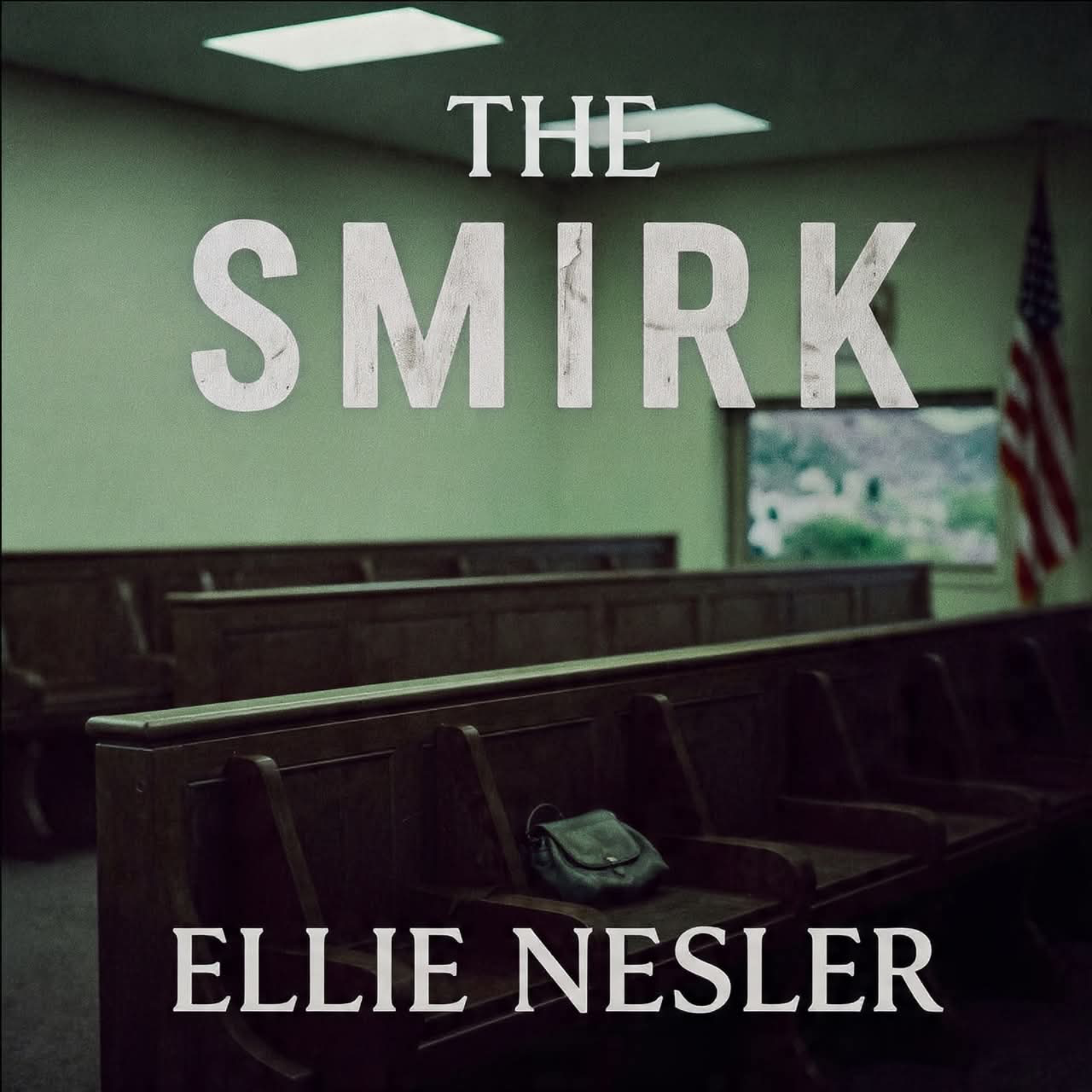
APRIL 2, 1993: The Day a Mother Snapped, the Ellie Nesler saga
The Story
APRIL 2, 1993. JAMESTOWN, CALIFORNIA.
A preliminary hearing. A smirk. Five shots.
Ellie Nesler was a single mom who waited 4 years for the system to protect her son.
When it didn't, she decided to protect him herself.
This is the Ellie Nesler saga.
Ellie Nestler sat on a hard wooden bench in the Jamestown Justice Court in California on April 2nd, 1993, her fingers likely tracing the cold, heavy shape of a 25 caliber pistol hidden inside her purse. Across the room sat Daniel Driver, a 35 -year -old camp counselor who had been accused of molesting five boys, including Ellie's 11 -year -old son, William. The small courtroom in the California Gold Country was thick with the tension of a preliminary hearing, a proceeding that was supposed to determine if Driver would finally face trial for crimes alleged to have happened five years earlier.
During a brief recess, as Driver was being led past the family, witnesses saw him look toward Ellie and her son and flash a cocky, self -assured smirk. For Ellie, that look was the final spark in a life already defined by a desperate grinding struggle for protection and justice. Moments later, as the court prepared to resume, she stood up, walked toward the defense table where drivers sat shackled, and fired five bullets into his head and neck. He was dead within the hour, and Ellie Nestler, a single mother living on welfare, was suddenly the face of a national firestorm over vigilante justice.
The path to that courtroom shooting didn't begin with a sudden snap. It was a slow erosion built over decades of hardship in the rugged foothills of Tuolumne County. Ellie was the eldest of three daughters born to a coal miner. Raised in a home where the values of the Old West, self -reliance and a fierce, almost territorial protection of family, were not just ideals, but survival strategies. As a teenager, she wasn't attending socials or planning for college. She was digging ditches driving tractors for cattle ranchers, and installing irrigation pipes to help her family keep their heads above water.
This was a woman who knew the weight of a tool and the necessity of hard, physical labor. But beneath that tough exterior was a history of trauma that few saw. Years later, her sister Jeanette would reveal that Ellie had been molested herself as a young girl, an experience that left her hypervigilant. and deeply suspicious of a world she felt was designed to fail the vulnerable. Her search for a better life even took her across the Atlantic. In the mid -1980s, Ellie married Bill Nestler, a gold miner and crop duster who dreamed of striking it rich in the new gold fields of Liberia.
She followed him to West Africa with their young son, William, and gave birth to their daughter, Rebecca, in the midst of a foreign land, but the dream of wealth quickly dissolved into a nightmare of violence. As the Liberian Civil War began to tear the country apart, Ellie found herself alone with two small children while her husband was often away at remote mining sites. Fearing for their lives, she fled back to California, settling once again in the familiar but impoverished surroundings of Jamestown while Bill remained in Africa.
She was back where she started, a single mother scraping by on welfare checks and odd jobs, determined to keep her children safe in a way she felt she never had been. Then came the summer of 1988, a season that would eventually lead to the carnage in the Jamestown courtroom. William, just six years old, begged to attend a Christian sleepaway camp. Ellie, protective to a fault, was initially hesitant but eventually relented. believing the church sanctioned environment would be the one place her son was truly safe.
It was there that William met Daniel Driver, a dishwasher at the camp who possessed a prior conviction for child molestation, a fact the camp had failed to uncover. When William returned home, he wasn't the same boy. He became sullen, prone to fits of rage, and deeply withdrawn. It took a full year of quiet agony before he finally confessed to an aunt that Driver had repeatedly molested and sodomized him, threatening to kill his entire family, if he ever spoke a word. The system Ellie had trusted to care for her son had instead delivered him directly into the hands of a predator.
The legal battle that followed was an exercise in agonizing delay. For four years, Ellie watched as Driver remained free. his case moving through the courts at a glacial pace. He was eventually arrested in 1992, not for the abuse, but for shoplifting in a different county. By the time the preliminary hearing arrived in April 1993, the pressure on Ellie had reached a breaking point. On the morning of the hearing, William was so physically sick with dread at the prospect of testifying that he was vomiting in the courthouse hallway.
When drivers smirked at the boy, Ellie didn't see a defendant. She saw a threat that the law was refusing to neutralize. The shooting was an execution in the eyes of the law. But to Ellie, it was the only way to ensure her son wouldn't have to live in fear for another second. She surrendered immediately, appearing remarkably calm as the handcuffs were clicked into place, later telling investigators, I may not be God, but I'm the closest damn thing to it for all the other little boys. The public reaction was instantaneous and deeply divided.
Thousands of letters poured in from across the globe, and supporters in Jamestown held spaghetti dinners to raise over $40 ,000 for her legal defense. To many, she was a folk hero, a mama bear who had done what any parent secretly wished they had the courage to do. But the heroic narrative began to crumble when toxicology reports revealed that Ellie had been high on methamphetamine at the time of the shooting. The prosecution used this to paint her not as a righteous protector, but as a drug -addled vigilante who had bypassed the very foundations of the justice system.
In 1994, a judge sentenced her to 10 years in prison for voluntary manslaughter, a term he explicitly called a punishment for an execution. During that sentencing, Ellie sat stiffly, only turning once to flash a brief, tired smile at her children. She knew her battle was far from over, as she had recently been diagnosed with advanced breast cancer that was already spreading through her body. Her time in prison was a revolving door of legal maneuvers and deteriorating health. In 1997, the California Supreme Court overturned her conviction due to juror misconduct.
It turned out one of the jurors had been influenced by outside rumors about Ellie's parenting. She eventually accepted a plea bargain for time served and was released to a hero's welcome in Tuolumne County. But the scars of the past decade were permanent. The vigilante mom tried to settle back into a quiet life, but the cycle of drugs and violence that had haunted her family continued to spiral. In 2002, she was arrested again, this time for selling and possessing methamphetamine. resulting in another six -year prison sentence.
The public sympathy that had once fueled her defense was largely gone. Replaced by the grim reality of a woman whose life was being consumed by the very chaos she had tried so violently to end. The most tragic legacy of Ellie's actions, however, played out through her son. William Nestler, the boy she had killed to protect, grew up in a world of profound instability while his mother was behind bars. By the age of 23, he had been booked in a county jail 18 times for robbery, battery, and drug offenses.
In July 2004, just an hour after being released from jail for a minor assault, William confronted a man named David Davis on a family property. In a fit of rage over missing tools, William stomped Davis to death. The boy who had been a victim was now a murderer. eventually sentenced to 25 years to life. Ellie, who was serving her own drug sentence at the time, was forced to watch from a distance as her son's life mirrored the violence she had once hoped to stop with five bullets in a courtroom. Ellie Nestler died on December 26, 2008 at the age of 56 at the UC Davis Medical Center in Sacramento.
The breast cancer had finally claimed her two days before she could meet her newborn grandson. Her life remains a stark, uncomfortable chapter in American legal history. A story of a mother who chose a path of absolute certainty in a system she found hopelessly broken. Her actions eventually helped spur stricter penalties for child molestation across the country, but the cost to her own family was absolute. She ended her life as she had lived much of it. Fighting a battle she couldn't win. leaving behind a legacy of protective rage and the devastating fallout of taking justice into one's own hands.
If you found this story compelling, please share it with a friend who appreciates a deep dive into the complexities of a human experience. And that's the way I heard it.
 Apple Podcasts
 Castbox
 Castro
 Goodpods
 Moon FM
 Overcast
 Pocket Casts
 Podbean
 Podcast Addict
 Podcast Republic
 Spotify